
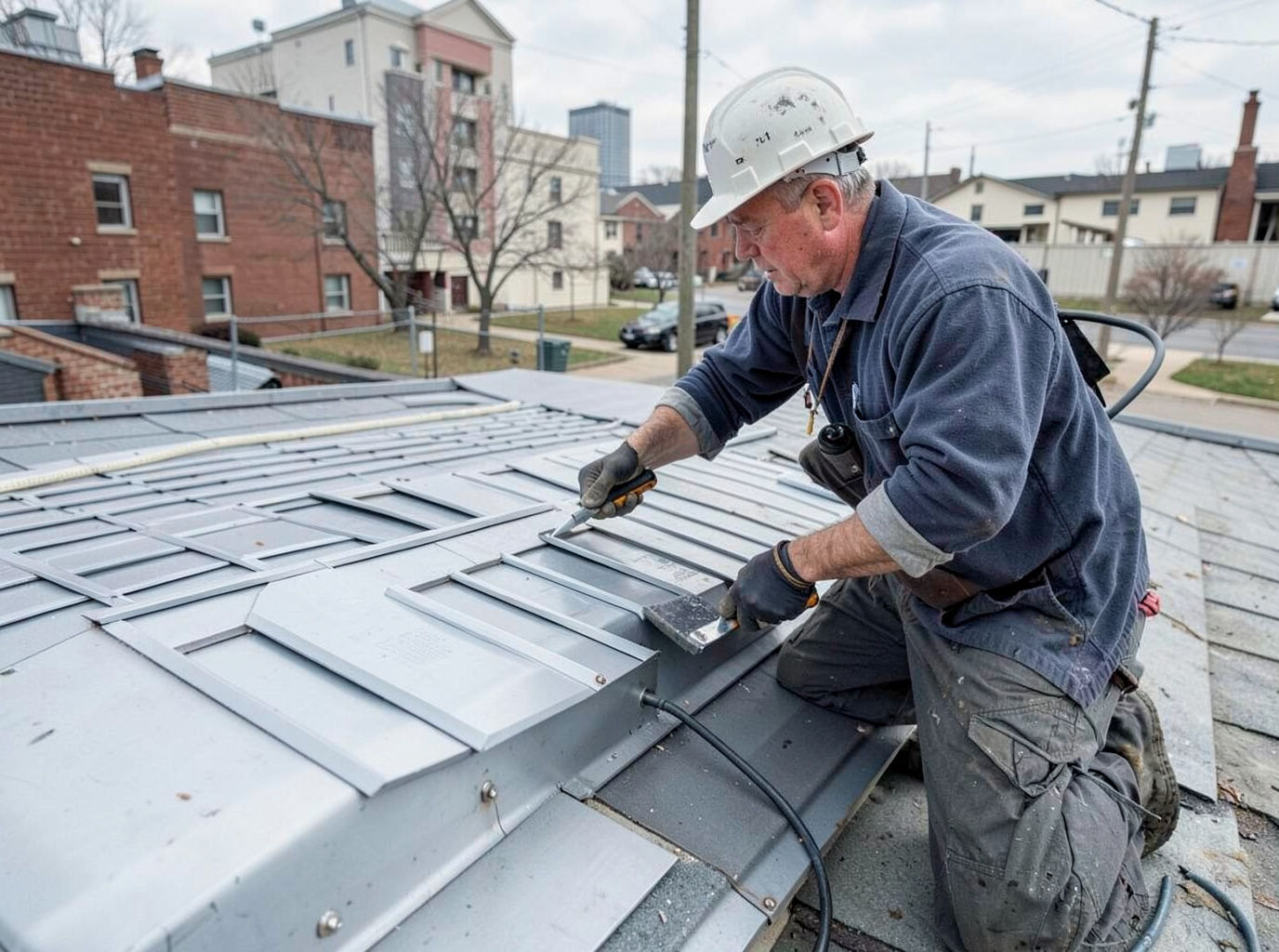
Flint homes built before the 1970s in neighborhoods like Carriage Town and Eastside often have limited original venting because builders relied on passive air movement through small gable vents. Lake-effect snow loads from Saginaw Bay push heavy, wet snow against roof edges for days at a time, creating ice dams that trap moisture and rot sheathing. Proper ridge and soffit venting balances intake and exhaust so attic temperatures stay closer to outside air even when daytime highs reach the 80s in July and drop below freezing at night. Without balanced flow, condensation forms on nail plates and insulation, shortening shingle life and raising energy costs for homeowners on the North Flint side of the Flint River.
Installation crews working in Woodcroft or Downtown Flint routinely find blocked or undersized soffit vents covered by multiple layers of paint and insulation blown in during the 1990s. Removing those obstructions requires cutting new intake slots without disturbing the original fascia boards that are often brittle from decades of freeze-thaw cycles. Ridge vent sections must be cut precisely to avoid hitting rafters spaced irregularly in pre-war homes, then sealed with high-temperature butyl tape that stays flexible when temperatures swing from single digits in January to mid-80s by late May. Crews also check for power attic fans already present, because adding mechanical exhaust without matching intake creates negative pressure that pulls conditioned air from living spaces below.
Genesee County building practices allow ridge vent on asphalt roofs provided the vent meets the 1:150 net free area rule and is installed over a continuous slot no wider than 1.75 inches. In Lapeer and Saginaw border areas where wind-driven rain is common, crews prefer vent profiles with external baffles rather than internal filters that clog with pine needles from nearby riverbank trees. Every job ends with a blower-door test to confirm the new vents do not create drafts through ceiling penetrations common in two-story brick homes on the Eastside.
Technician insight
In Flint, the thing that catches most people out with Roof Ventilation Installation is how many pre-war homes in Carriage Town and Eastside still have original plaster ceilings with almost no insulation baffles. Lake-effect snow sits on the north slopes for weeks, so if the soffit intake is even partially blocked the ridge vent cannot pull enough air and you get ice dams right above the bedroom ceilings.
Ice Dam Prevention On Eastside Two-Story
Homeowner reported water stains on second-floor ceilings after repeated January thaws. Inspection showed original gable vents clogged and no ridge vent on the 1928 roof. Crew cut a continuous ridge slot, added matching soffit intake, and restored baffles around the existing insulation. No further staining appeared the next winter.
Roof Ventilation Installation Services We Offer
✓Ridge Vent Installation
Continuous ridge vent cut into the peak to exhaust hot air and moisture before it melts snow into ice dams on Flint roofs.
✓Soffit Vent Upgrades
New intake vents added or enlarged along eaves to balance airflow in older Carriage Town and North Flint homes with closed soffits.
✓Turbine Vent Replacement
Whirlybird-style turbines swapped for low-profile ridge or box vents that withstand heavy lake-effect snow without seizing.
✓Gable Vent Additions
Supplemental gable-end vents installed on Eastside two-story homes where ridge access is blocked by complex rooflines.
✓Attic Fan Integration
Electric or solar attic fans paired with new intake vents to move air in Woodcroft homes with limited natural draft.
Roof Ventilation Installation Cost in Flint, MI
| Service | Typical Range | What Affects It |
|---|---|---|
| Ridge Vent Addition Only | $650–$1,100 | Single-story homes with clear ridge access |
| Soffit Vent Upgrade | $450–$900 | Per side; increases with multiple layers of paint or insulation |
| Full Ridge And Soffit Package | $1,400–$2,400 | Two-story Eastside or Carriage Town homes with irregular rafters |
| Turbine To Ridge Conversion | $550–$850 | Includes patching old turbine holes |
Ranges are typical for Flint, MI and confirmed with an exact written quote before any work starts.
How it works
- 1
Attic Inspection
Crawl the attic to measure existing net free area, locate insulation blockages, and note rafter spacing typical in pre-1970 Flint construction.
- 2
Vent Layout
Mark ridge slot and soffit openings on the exterior while confirming clearance from chimneys and power lines common on Genesee County streets.
- 3
Cutting And Removal
Cut continuous ridge opening and enlarge soffit slots, removing old paint, insulation, and damaged sheathing without disturbing original fascia.
- 4
Installation And Sealing
Install new ridge and intake vents with butyl tape and nails rated for cold-weather flexibility, then restore insulation baffles.
- 5
Final Airflow Check
Run a blower test and visual inspection from the street to confirm balanced flow before leaving the job in neighborhoods like Downtown Flint.
Pricing
Most Flint roof ventilation jobs fall between a few hundred dollars for simple ridge additions and low thousands when soffit work and older-home adjustments are required.