
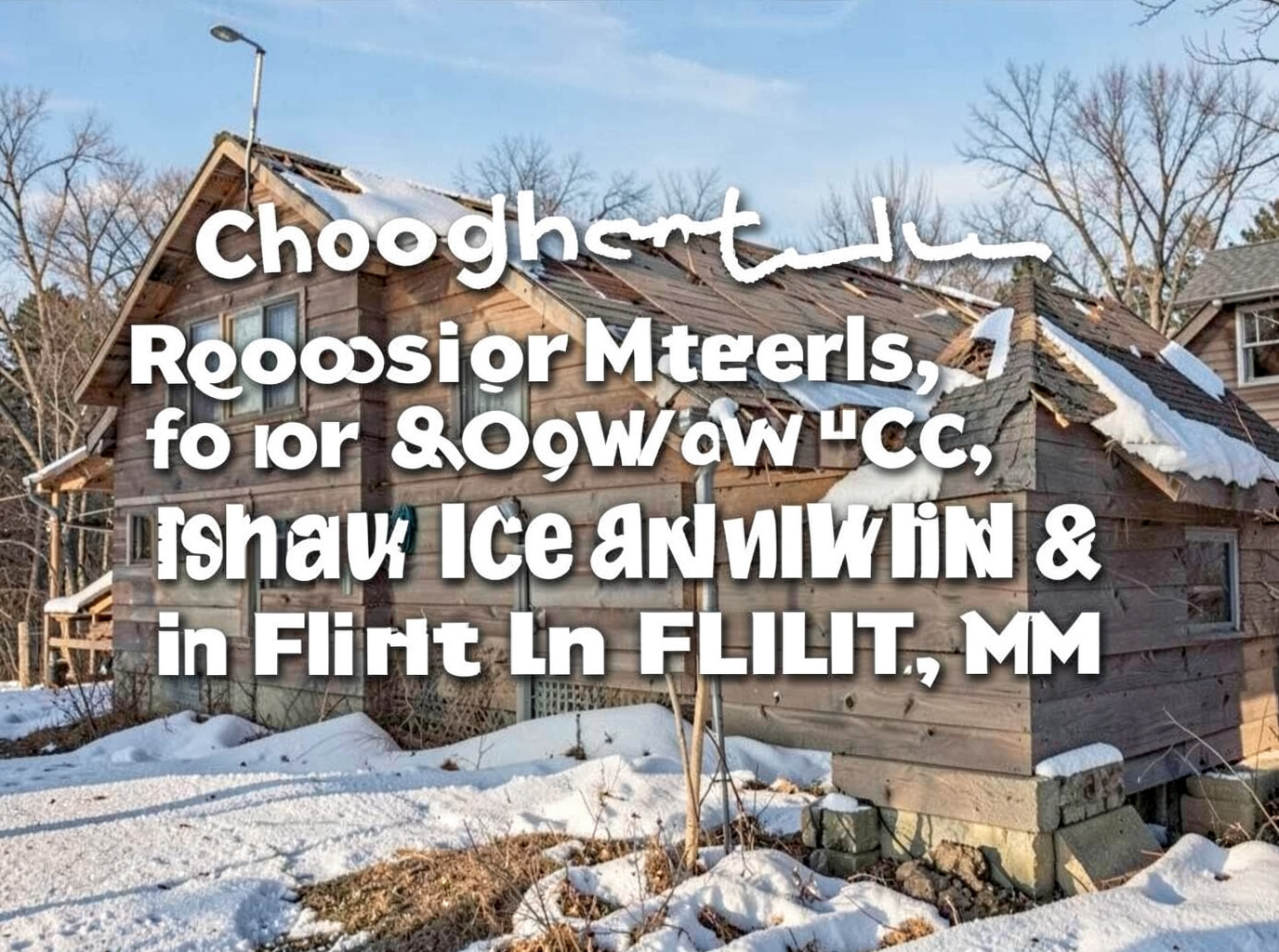
Roofing work in Davison often centers on neighborhoods with 1950s and 1960s ranch and colonial homes set on larger lots along streets near Davison High School. As a contractor based in Flint we see how lake-effect snow builds up on these roofs each winter, driving calls for ice dam removal and shingle replacement before spring rains hit Genesee County. Warm summers then accelerate shingle aging on south-facing slopes, so we schedule inspections around the actual weather patterns rather than generic calendars.
Access in Davison usually means pulling equipment onto driveways bordered by mature trees that can drop limbs onto roofs during storms. We route trucks from Flint via I-69 and M-15 to reach these properties quickly, checking for drainage issues where flat sections of Genesee County soil hold water against foundations after heavy melts. This local pattern changes how we stage materials and protect landscaping on each job.
Serving Davison from our Flint base lets us cover both quick leak repairs after winter weather and full roof replacements on homes near the Davison Public Library. We match asphalt or metal systems to the actual pitch and exposure on each block instead of using one-size solutions that fail faster under repeated snow loads.
Around Davison, MI
We regularly work near:
- 📍Davison High School
- 📍Davison City Park
- 📍Davison Public Library
- 📍Main Street Davison
- 📍Davison Township Hall
Roofing Contractor in Davison, MI — Local Notes
- •Davison lots often have mature oaks and maples that drop debris and limit crane reach, so we use smaller staging areas and hand-carry bundles on many jobs.
- •Post-war homes here commonly have 4:12 to 6:12 pitches with original felt underlayment that fails after repeated freeze-thaw cycles from lake-effect snow.
- •Flat sections near the Flint River tributaries collect meltwater, requiring extra attention to valley flashing and gutter tie-ins during every replacement.
- •Drive times from Flint via I-69 let us reach Davison jobs the same morning after overnight snow events, keeping crews ahead of the next warm-up that turns roofs into ice dams.